
If you've ever tried to shout a turn to a riding partner over wind and traffic, you already know why cycling intercoms exist. A good one lets you talk normally — relaxed, hands on the bars, eyes on the road — across a gap of a few hundred metres. The problem is that most "best intercom" guides you'll find online are written for motorcyclists. Cycling has different needs: lighter kit, helmets that vary wildly in shape, and a much bigger safety premium on actually hearing the road around you.
So here's a genuinely cycling-first look at what to weigh up in 2026, and how the main options stack up.
What actually matters in a cycling intercom
Before any brand names, four things separate a unit you'll use every ride from one that lives in a drawer.
Range and how it connects. Most rider-to-rider systems use Bluetooth or mesh networking. For two people riding together, a clean Bluetooth link in the 200–300m range covers almost every real situation — you rarely sit further apart than that and still want to chat. Mesh systems extend further and add more riders, but they cost more and add bulk you may not need.
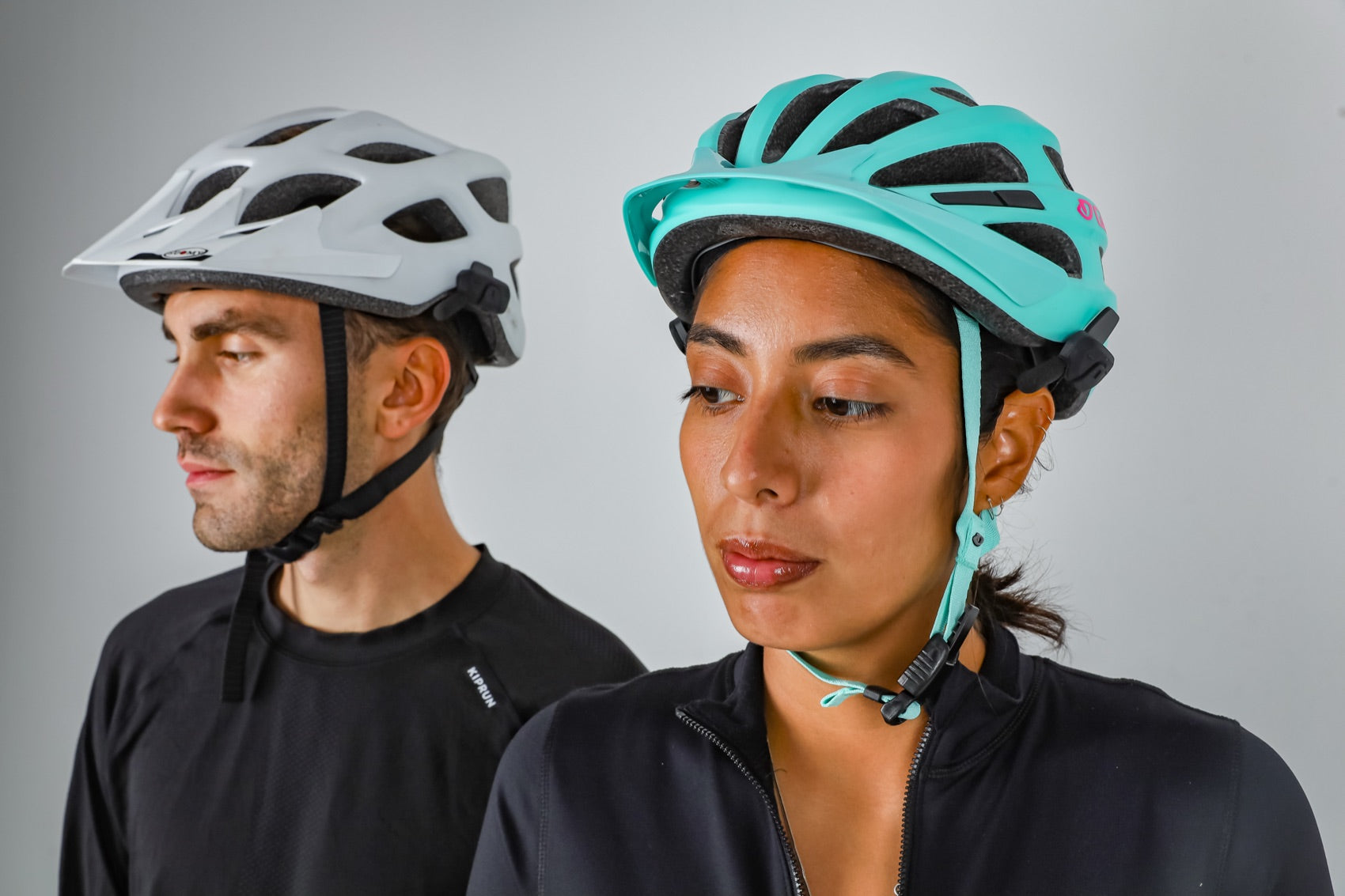
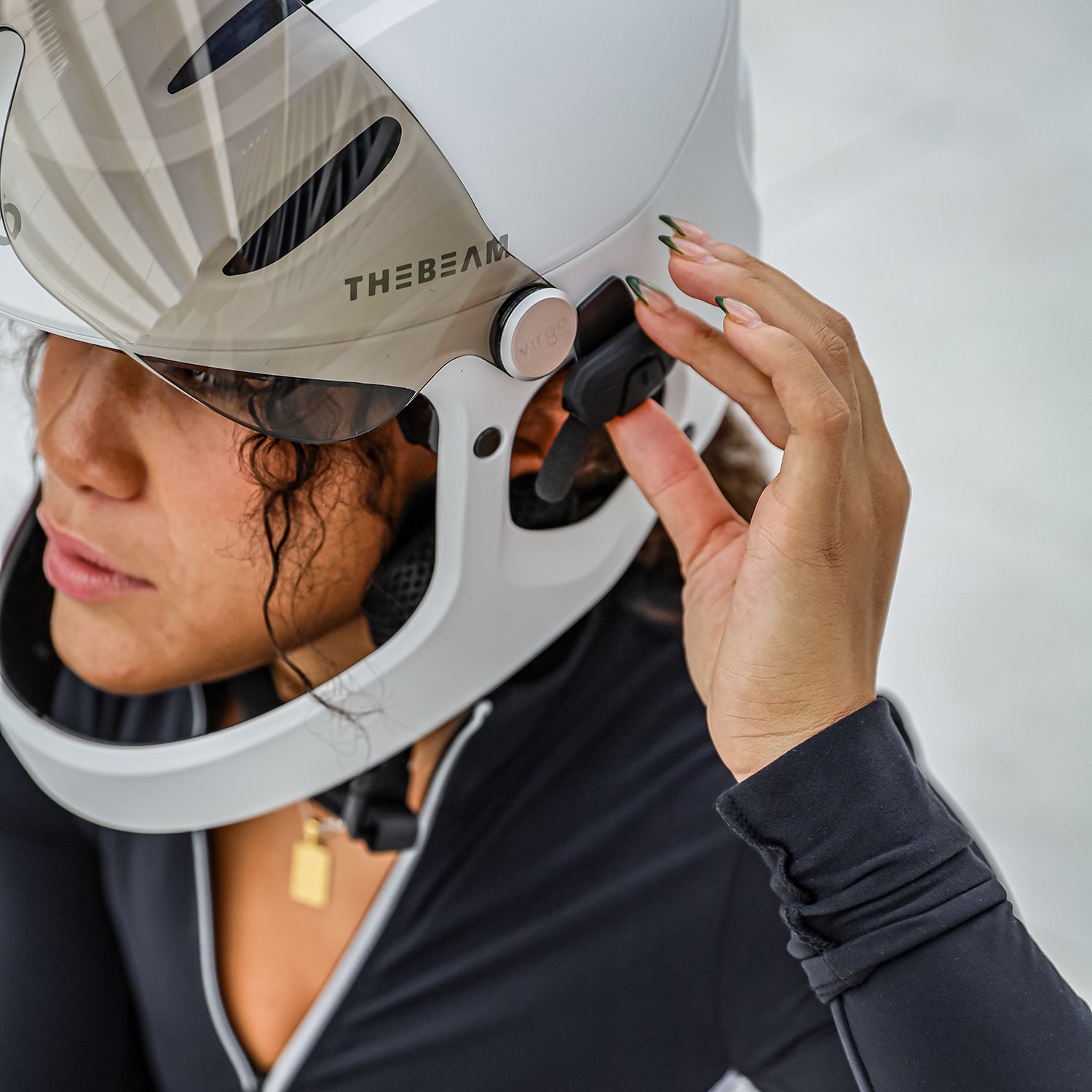
Helmet fit. This is where cycling diverges hardest from motorcycling. Road, gravel and commuter helmets are vented and oddly shaped, and you probably don't want to buy a new helmet just to get an intercom. Systems that mount onto the helmet you already own — especially ones that, once fitted, let you click the units on and off magnetically — are far more practical than ones that assume a specific shell or a built-in unit.
Open-ear vs in-ear. A cycling intercom should never seal your ears. Open-ear audio sits just outside the ear canal so traffic, other riders and your own surroundings still come through. It's the single most important safety feature, and it's worth choosing a system built around it rather than one that ships with isolating buds.
Battery, weather and price. All-day rides need real endurance — look for around 8 hours of talk time. Sweat and rain mean an IP rating in the IP6x range is sensible. And price matters: flagship motorcycle-derived systems can run two to three times the cost of a purpose-built cycling unit.
The main contenders in 2026
Sena is the most established name, with several cycling-oriented units. Its mesh-capable systems offer long range and support large groups, and the app ecosystem is mature. The trade-offs are price and complexity: you're often paying for tour-grade features a typical pair of riders won't use, and some kits still assume you'll work around helmet fit.
Cardo Packtalk is excellent hardware — JBL speakers, reliable mesh, long battery — but it's fundamentally a motorcycle product that cyclists borrow. It's heavier and pricier than most riders need, and the speaker setup isn't designed around the open-ear, stay-aware priority that road cycling demands.
Vertix Velo and similar cycling-specific entrants focus on voice-activated, helmet-mountable designs with noise handling for wind. These are closer to the right idea for cyclists, though availability and ecosystem vary by market.
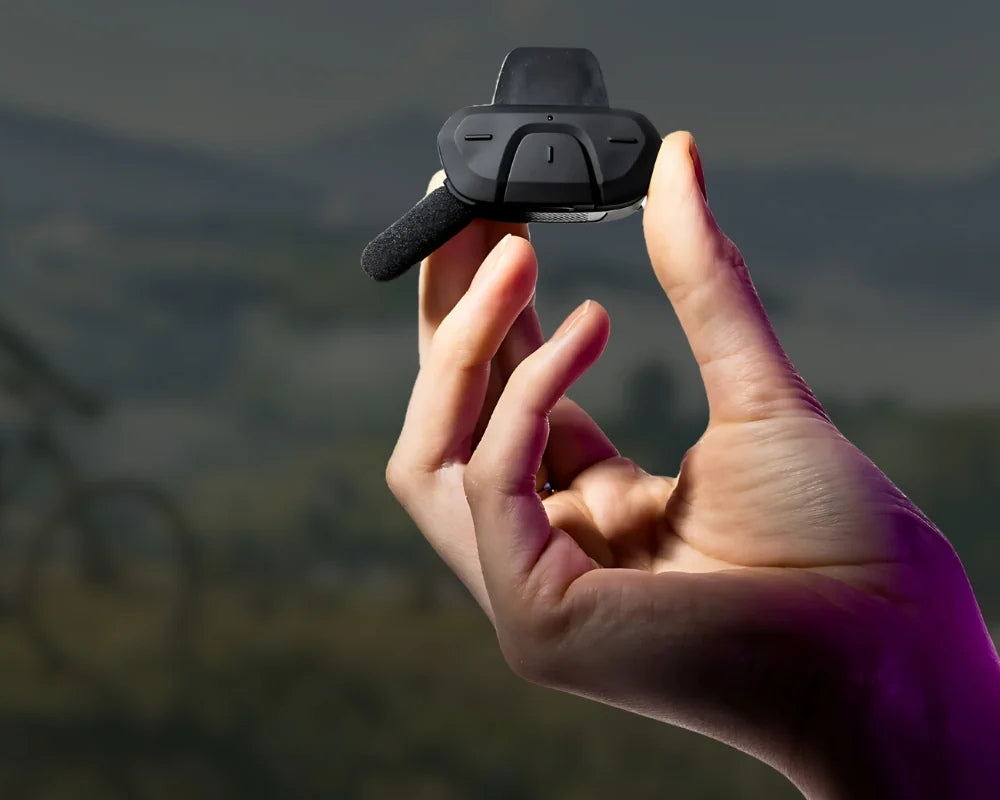
Roamee (by Supertooth) is built from the cycling angle out. You set it up by sticking two small adhesive mounts onto any cycling helmet — they come in two sizes to fit road, gravel and commuter shells perfectly — and then the two units click on and off magnetically in a second. The units themselves are genuinely discreet and light, so once they're on you barely notice them. There's no new helmet to buy. It's open-ear by design — you talk to your riding partner up to 300m away while still hearing the road — and it doubles as your music, calls and GPS-audio device, so you're not stacking gadgets. It's IP66, runs about 8 hours, charges over USB-C on Bluetooth 5.1, and comes in at €89 Solo or €169 for the Duo pack (two units already paired). For two people who ride together regularly, that combination of fits-any-helmet, open-ear and price is the practical sweet spot. See the full spec on the Roamee product page.
How to choose, quickly
If you ride as a pair or a couple, you want a simple two-way system with reliable Bluetooth range and great helmet fit — not a mesh network built for ten motorcyclists. A pre-paired duo kit like Roamee's is the least-hassle route; there's more on how riders use it in the Roamee community.
If you ride in large, changing groups and money is no object, a mesh system (Sena, Cardo) earns its keep — accept the weight and price.
Whatever you pick, prioritise open-ear. The whole point of an intercom is to make group riding safer and more sociable, and that falls apart the moment you can't hear a car coming. If you're unsure how open-ear audio keeps you aware while still delivering clear sound, we explain it here: What is open-ear audio?
The bottom line
The "best" cycling intercom in 2026 isn't the one with the longest spec sheet — it's the one you'll actually clip on every ride. For most cyclists that means: open-ear for safety, a mount that fits the helmet you already own, enough range to chat naturally, and a price that doesn't belong to a motorbike. Judge any system against those four, and the shortlist gets clear fast.
Got questions about range, battery or helmet fit? Our FAQ covers the details — or try Roamee and hear the difference on your next group ride.

Laisser un commentaire
Ce site est protégé par hCaptcha, et la Politique de confidentialité et les Conditions de service de hCaptcha s’appliquent.